
An artist’s production language is built from repeated decisions.
Which sounds are allowed to remain rough? How much space surrounds the drums? When should the bass be felt more than heard? How long can a loop continue before one small change redirects the entire track?
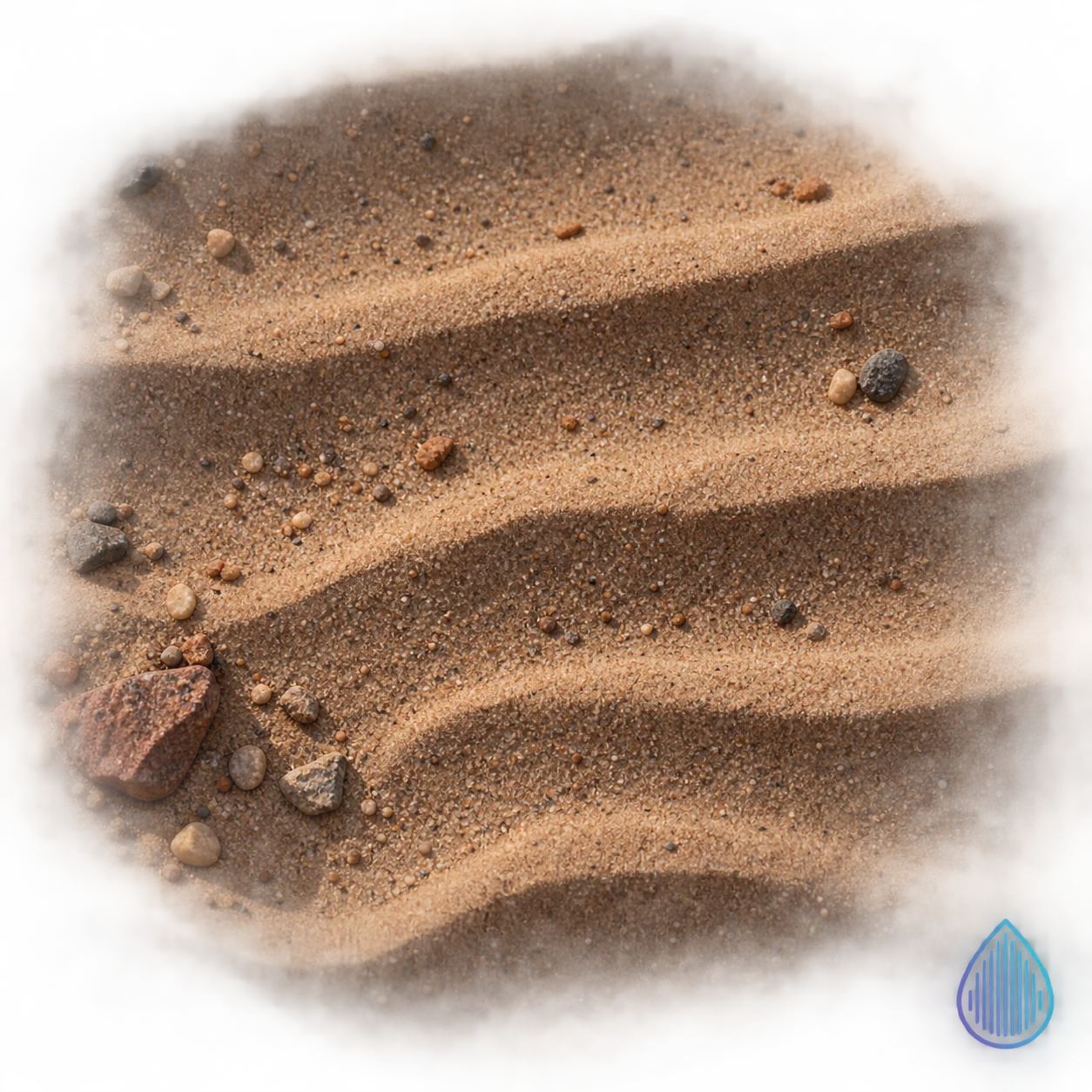
For Turntable Kachina, those decisions create music that feels physical, spacious, and grounded. Instrumental Hip-Hop, ambient music, house, funk, and cinematic electronics may all enter the vocabulary, but they are treated as materials rather than rigid categories.
The result is a recognizable musical environment: dusty drums, warm low end, open sky, and human movement inside the machine.
Dusty Drums
Drums establish the surface of a Turntable Kachina track.
They are not always polished until every irregular edge disappears. A kick may carry softness around its impact. A snare may feel dry, worn, or pulled from another room. Smaller percussion can sound as if it has passed through vinyl, tape, dust, or years of handling.
That texture gives the rhythm a history.
Perfectly clean drums can be powerful, but they can also feel detached from the world around them. Turntable Kachina often preserves enough grain and imperfection to make the beat feel touched.
This connects the project to the language of instrumental Hip-Hop and sample-based production, where the character of a drum can matter as much as the pattern it plays.
The groove does not come only from placing hits on a grid. It comes from the relationship between timing, tone, decay, and silence.
Warm Low End
Bass gives music gravity.
In Turntable Kachina’s music catalog, low frequencies often create the foundation that makes every other element feel physically located. The bass may move gently, but it establishes weight. It can hold a track together without demanding the listener’s full attention.
Warm low end is not the same as excessive low end.
The goal is not to overwhelm every speaker or bury the composition under pressure. It is to shape a foundation that feels rounded, stable, and connected to the drums.
When the kick and bass communicate correctly, the groove becomes larger than either sound. One supplies impact. The other gives that impact duration and depth.
This is where Turntable Kachina’s relationship with dance music and house becomes visible. Even when a track is patient or atmospheric, the low end remembers the body.
Open Sky
Space is one of the project’s most important instruments.
A production can contain many carefully designed sounds and still feel small if everything is placed at the same distance. Turntable Kachina creates scale by allowing some elements to remain near, others to recede, and some parts of the frequency range to remain almost untouched.
That openness reflects the Northern Arizona environment surrounding the project: long sightlines, changing elevations, exposed geological layers, and weather visible across great distances.
The music does not reproduce those landscapes literally. It carries their dimensions.
Reverb can create a horizon behind the drums. A distant texture can suggest scale without becoming a melody. Silence can separate two sounds far more effectively than another layer placed between them.
Open sky, in production terms, is permission for the track to breathe.
The Patience of Ambient Music
Ambient influence does not require removing rhythm.
It can appear in the way sound develops slowly, how atmosphere surrounds a beat, or how a repeated texture changes the emotional temperature without announcing itself.
Turntable Kachina uses ambient space to expand rhythmic music rather than escape from it.
A drone can make a kick feel more grounded. A sustained tone can change the perceived color of a sample. Environmental texture can turn a straightforward groove into a place the listener occupies.
This approach becomes especially clear during extended listening. The project’s playlists allow these shifts in atmosphere and pacing to develop across a longer sequence.
The listener is not pushed toward constant climax. There is time to enter the environment.
Funk Is in the Relationship
Funk is not limited to a particular instrument, tempo, or historical reference.
It lives in the relationship between parts.
A bass note arrives slightly differently because of the kick beneath it. A snare creates tension against a repeated phrase. A sound disappears at exactly the point where the body expects it to continue.
Turntable Kachina draws from funk through timing and interaction.
Even heavily electronic material can feel human when its parts respond to one another. A groove gains personality from controlled imbalance—the tiny places where movement resists complete mechanical regularity.
That does not mean abandoning precision. It means using precision to protect the feel rather than erase it.
The machine maintains the structure. Human listening decides where the structure should bend.
Samples as Physical Material
A sample is not simply borrowed sound. It is material with shape, surface, and history.
It can be cut into rhythm, stretched into atmosphere, filtered until only a small frequency range remains, or placed intact so its original character continues to speak.
Turntable Kachina approaches samples like found physical objects. The producer’s work is to study their properties and determine how they fit into a new environment.
Some samples become obvious structural elements. Others are transformed until their origins are no longer important. A brief fragment can function like a mineral vein running through a larger piece of stone: small in proportion but essential to the character of the whole.
This process is part of the project’s connection to turntable culture. Records are not passive archives. They are places where new relationships can begin.
Cinematic Without Becoming Decorative
The word “cinematic” is often used to describe music that sounds large, but size alone is not enough.
Cinematic music creates perspective.
It establishes foreground and distance. It guides attention. It introduces details that change the listener’s understanding of what came before. It allows tension to develop and resolve through pacing rather than volume alone.
Turntable Kachina uses cinematic thinking inside beat-driven music.
A track can begin with a close, narrow texture and gradually open into a larger environment. Drums can enter like a change in physical scale. A repeated sample can become more emotionally significant because of what gathers around it.
The production creates motion without requiring a literal story.
Selected visual extensions of that work can be found on the project’s videos page.
A Language, Not a Formula
A production language should make an artist recognizable without forcing every track to become the same.
Dusty drums, warm bass, negative space, sample texture, patient development, and environmental scale are recurring elements within Turntable Kachina’s work. They provide continuity, but they do not function as a fixed recipe.
One release may lean toward instrumental Hip-Hop. Another may carry the pulse of house, the openness of ambient music, or the movement of funk. The identity remains intact because the underlying decisions remain connected.
This is also what gives each project in the 1st Drop Music ecosystem its own voice. Artists may share tools, collaborators, or infrastructure without sharing the same creative language.
Turntable Kachina’s language is built from matter and space.
The drums carry dust. The bass carries weight. The atmosphere carries distance. The rhythm keeps everything moving.
Explore the complete Turntable Kachina music catalog, follow the project’s evolving playlists, and find every official destination through the links page.