
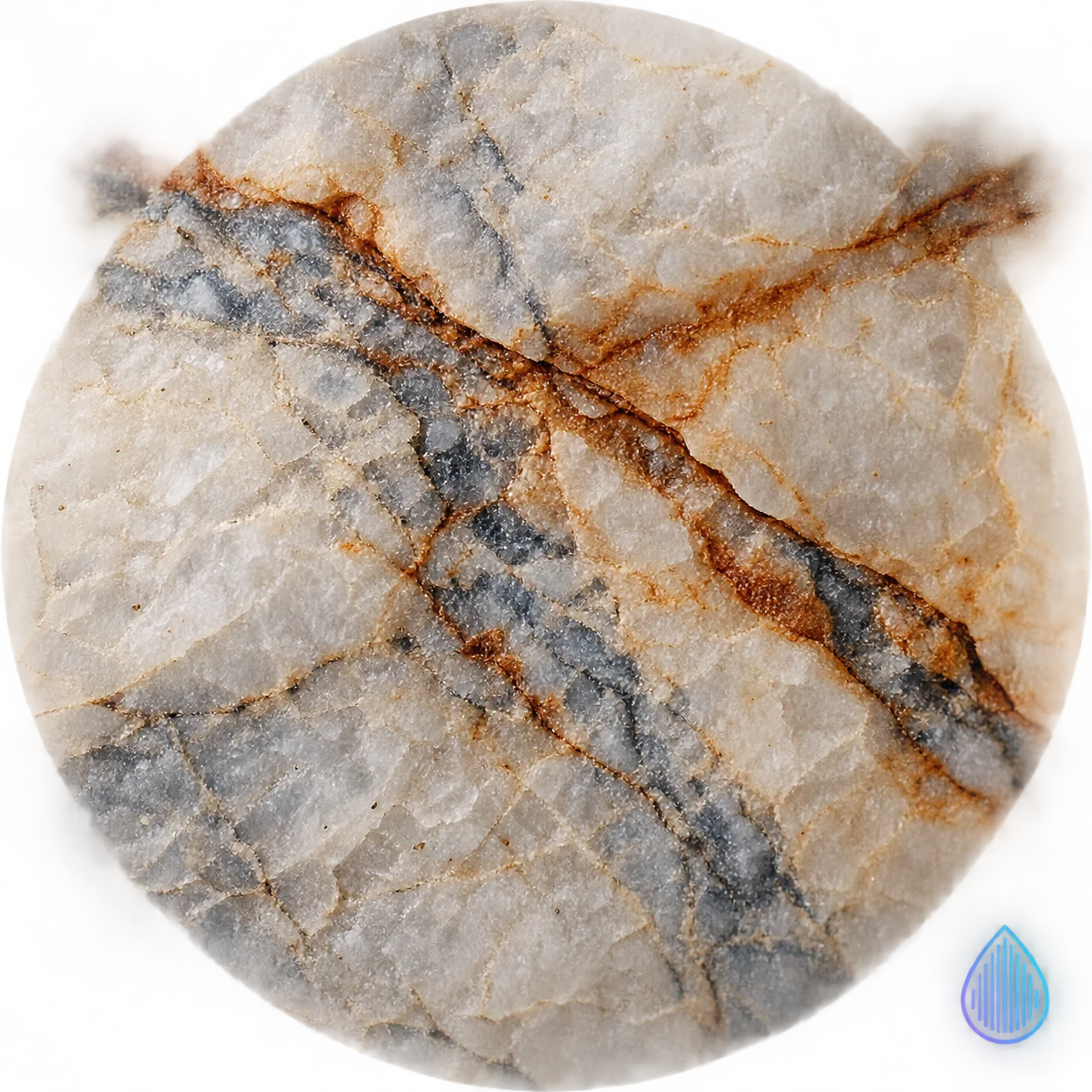
Electronic music is often discussed as if it exists somewhere beyond the physical world—a collection of files, signals, software, and invisible instructions. But sound is never truly weightless. It moves air. It presses against walls. It travels through the floor, vibrates a turntable needle, and lands in the body before the mind has finished naming it.
That physical relationship with sound sits at the center of Turntable Kachina.
The project approaches electronic music as an environment: somewhere a listener can enter, move through, and observe. A track is not simply a sequence of beats leading toward a conclusion. It is a constructed space made from rhythm, texture, silence, repetition, and pressure.
Sound You Can Feel
Low frequencies make the physical nature of music impossible to ignore. Bass can be heard, but it can also be felt in the chest, the floor, and the objects surrounding a speaker.
Turntable Kachina’s music treats low end as part of the composition rather than decoration added after the fact. Bass gives the music gravity. It determines how a track occupies a room and how the listener moves inside it.
The drums provide another kind of physical information. A kick establishes weight. A snare defines distance and impact. Smaller pieces of percussion establish surface and movement—something granular, metallic, wooden, dusty, or dry.
Together, these elements produce more than a groove. They give the track a material presence.
That presence connects Turntable Kachina to the physical traditions behind DJ culture, instrumental Hip-Hop, and sample-based electronic music. The tools may include modern production software, but the underlying idea is older: music becomes meaningful through touch, timing, repetition, and human decisions.
Building a Place, Not Filling a Track
A production does not need to be crowded to feel complete.
Sometimes the strongest decision is leaving an opening where another sound could have gone. Empty space allows a drum to land harder. It gives a sample room to remain strange. It lets the listener notice the decay of a note or the texture buried underneath it.
That restraint is part of the Turntable Kachina production language. The goal is not to fill every available frequency. It is to build a setting where each sound has a reason to exist.
The result can feel closer to a physical landscape than a conventional arrangement. Some elements sit near the listener. Others appear far away. A repeated phrase becomes a horizon. A low drone changes the atmosphere. Percussion moves across the stereo field like loose material carried by wind.
You can hear that environmental approach across the project’s releases and longer listening sequences in its playlists.
Texture Carries Memory
A perfectly clean sound can be useful, but perfection does not always communicate history.
Record noise, tape saturation, filtered samples, uneven transients, and small timing variations can make electronic music feel lived in. These details suggest that a sound has traveled through something before reaching the listener.
That journey matters.
Turntable Kachina uses texture as a form of memory. A sound may feel worn, buried, sun-faded, or partially recovered. It can suggest machinery, stone, dust, old media, or an object handled repeatedly over time.
None of those associations need to be explained directly. Texture creates meaning before language arrives.
This is one reason sampling remains so powerful. A sample contains more than pitch and rhythm. It carries traces of the recording, performance, room, equipment, and era that produced it. When placed into a new composition, it becomes both material and memory.
The producer’s role is not merely to collect those sounds. It is to recognize which fragments belong together and construct a new environment from them.
Repetition Changes the Listener
Repetition is sometimes mistaken for simplicity, but repeated sound is never completely static.
The listener changes with every cycle.
A phrase that initially feels unfamiliar becomes recognizable. A small background detail begins to move forward. A rhythm that seemed straightforward reveals an accent that was always present. The same loop can feel different after the bass enters, after the drums disappear, or after silence interrupts it.
Turntable Kachina uses repetition to deepen attention. Instead of constantly replacing one idea with another, a track can remain with a sound long enough for its character to become clear.
That patience connects the project’s production work to DJ culture. A DJ learns how long a groove can hold a room, when a transition should arrive, and how a small change can alter collective energy. Those lessons remain present even when the work is created in the studio rather than performed behind decks.
The relationship between recorded music and performance can be explored further through Turntable Kachina’s videos and other project links collected on the official links page.
Technology Should Serve the Material
Electronic music depends on technology, but tools do not automatically create a point of view.
A producer can own thousands of plugins, samples, presets, and virtual instruments without developing a recognizable musical language. The important question is not how much technology is available. It is what the artist chooses to do with it.
Turntable Kachina uses digital production as a way to organize physical ideas: impact, distance, movement, density, erosion, repetition, and space.
The machine is useful because it allows precise control. A sound can be shortened, stretched, filtered, reversed, layered, or moved by fractions of a second. But precision is not the same as sterility. The finished work still depends on taste, instinct, listening, and the willingness to leave useful imperfections intact.
The technology supports the environment. It does not replace it.
That principle also connects Turntable Kachina with the broader group of independent projects supported by 1st Drop Music. Across that ecosystem, electronic tools serve distinct creative identities—from the expansive world of Bear the Astronot to the songwriter-centered work of Bear Cole. Shared tools do not require shared results.
Music as an Environment
When electronic music works as an environment, listening becomes active.
You begin to notice where sounds are positioned. You feel the difference between an open section and a crowded one. You recognize when a beat is pulling you forward and when it is asking you to remain still.
The track becomes somewhere to spend time.
This is the larger idea behind Turntable Kachina: sound is matter, and composition is the act of arranging that matter into a place. Rhythm becomes structure. Bass becomes gravity. Texture becomes memory. Silence becomes distance.
Nothing is truly weightless.
Enter the environment through the complete Turntable Kachina music catalog, explore the curated playlists, or read more about the project in the news archive.